


 Online stores
 Freight consultation
Tuesday June 30th, 2026
New Customs Rules: Why Dominican Business Owners Need More Logistics Planning Than Ever
For many Dominican companies, importing or exporting goods is part of daily operations. It may be a small business bringing in products to sell, an industrial company importing raw materials, a company that needs spare parts, a store purchasing inventory abroad, or a business exporting its products to other markets.
But in today’s international trade environment, moving goods is no longer just about finding a supplier, paying an invoice, and waiting for the shipment to arrive.
Today, logistics requires more organization, more documentation, more compliance, and more technical knowledge.
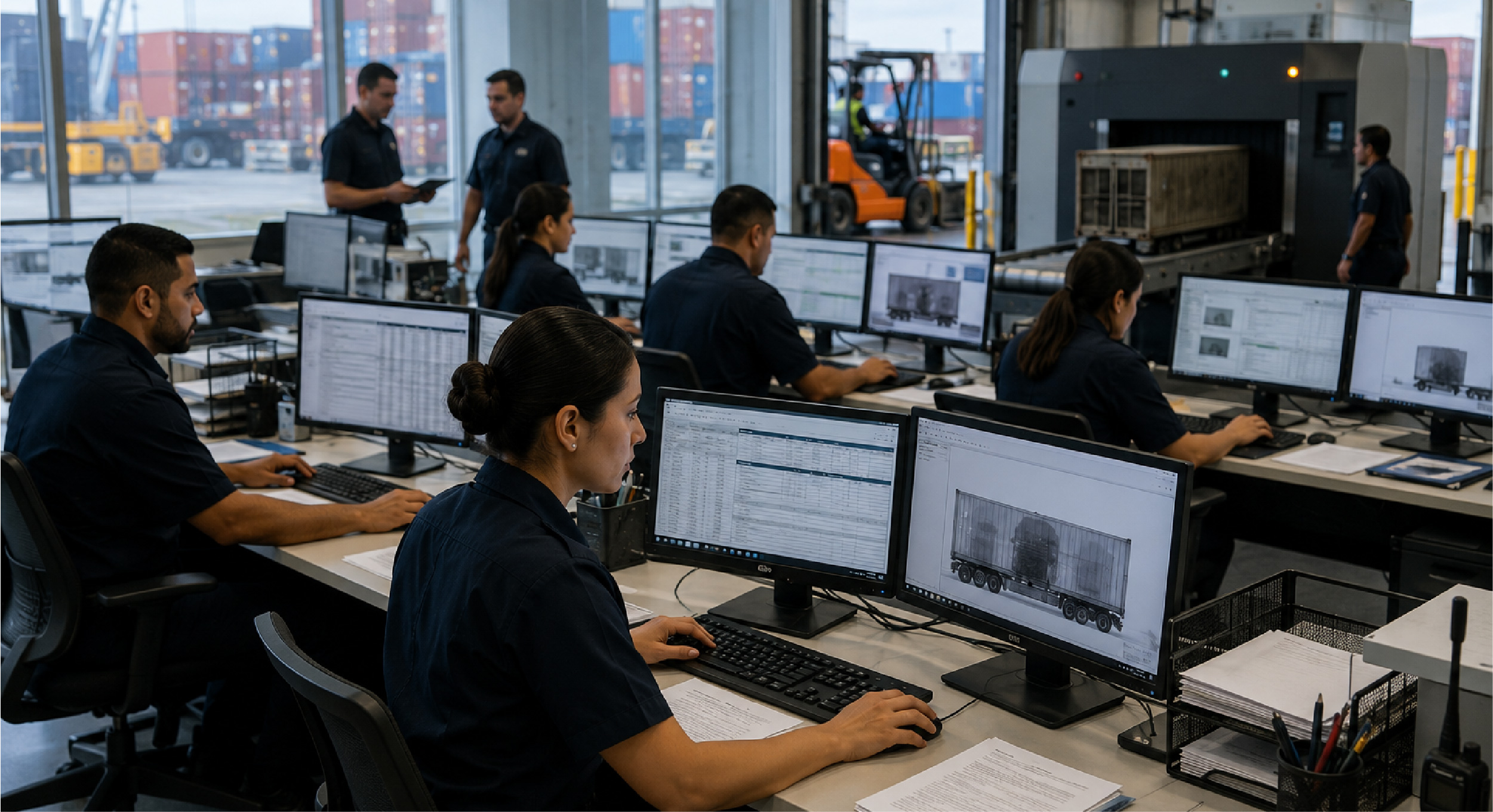
In the Dominican Republic, the customs framework has been modernizing through Customs Law 168-21, enacted in August 2021, which replaced previous legislation and sought to adapt the customs system to new technologies, trade agreements, and trade facilitation processes. The General Directorate of Customs explains that this law incorporated elements such as electronic traceability, non-intrusive inspections, advance transmission of manifests, and provisions related to logistics operators and logistics centers.
More recently, Decree 609-24, effective as of February 21, 2026, has been identified as part of a new operating environment for importers, exporters, customs brokers, and other foreign trade participants, establishing greater requirements for organization, formalization, and compliance.
In other words, the country is moving toward a more modern customs system, but also toward a business environment that requires greater preparation.
The New Challenge: It Is Not Enough to Import; You Have to Import Properly
For a Dominican business owner, a customs error can have significant consequences.
An incomplete invoice, an incorrect product description, an inaccurate tariff classification, expired documents, unmanaged permits, or inconsistent information can lead to delays, additional costs, fines, unexpected storage fees, or detained merchandise.
And when goods are delayed, the impact does not stay at the port or airport. It reaches the business directly.
It can affect inventory replenishment, customer deliveries, a commercial promotion, industrial production, a committed sale, or the company’s reputation.
That is why, in today’s environment, logistics should not be seen as a routine operational task. It should be viewed as a strategic business decision.
The business owner who plans better, documents better, and works with specialized partners has a greater chance of reducing risks and keeping operations running more smoothly.
More Formalization, More Documentation, More Responsibility
One of the most important changes in the new customs context is that companies must be more internally organized.
Recent analyses of Decree 609-24 indicate that legal entities involved in foreign trade must pay closer attention to documents such as tax certifications, corporate records, sworn statements, identification of ultimate beneficial owners, banking validations, and possible inspections to verify business addresses. This implies greater document updating, administrative structure, and technical support.
For a large company, this may represent a process adjustment. For a small or medium-sized business, it may feel like a much greater challenge.
This is where having an experienced logistics partner makes a real difference.
Because many business owners do not have the time or internal staff to master every detail of the customs process. Their priority is selling, producing, serving customers, managing inventory, and growing their business.
But goods must comply. And compliance requires knowledge.
A Modern Customs System Also Aims to Facilitate Trade
It is important to clarify something: customs modernization should not be seen only as more requirements. It also aims to facilitate trade, improve traceability, reduce processing times, and make the country more competitive.
The General Directorate of Customs itself highlights Customs Law 168-21 as a pillar in consolidating the Dominican Republic as a regional logistics hub. Among its elements are the conceptualization of logistics centers, logistics operators, logistics community systems, advance transmission of manifests, and the acceptance of import documentation in English.
In addition, initiatives such as the 24-Hour Dispatch program aim to generate savings, improve planning, and allow importers to get their products to the final consumer more quickly.
The DGA has also reported progress in automating and simplifying cargo clearance. In an institutional publication, it stated that 68% of importers who had cleared goods in 24 hours or less were small and medium-sized businesses, showing that these tools are not designed only for large companies.
The opportunity is there. But to take advantage of it, businesses must be prepared.
Tariff Classification: A Detail That Can Change Everything
One of the most sensitive points for any importer is tariff classification.
Each product must be declared correctly according to its nature, composition, use, and corresponding tariff code. Taxes, permits, requirements, and applicable treatment depend on that classification.
The same product can have different implications depending on how it is classified. And an error at this stage can generate payment differences, observations, corrections, or delays.
That is why it is not enough to say, “I am bringing in merchandise.” A company must know what it is importing, how it should be declared, which documents are required, and which authorities may be involved.
The DGA has made digital tools such as SIREVUCE available, allowing importers and exporters to consult requirements and permits managed through the Single Window for Foreign Trade, as well as to search by tariff subheading and product description for customs duties and sanitary or administrative provisions.
These tools are very valuable, but they also require interpretation and experience. Technology helps, but technical judgment remains essential.
Customs Compliance: An Investment, Not an Expense
Many business owners see customs compliance as an administrative cost. In reality, it should be seen as an investment in operational continuity.
A company that organizes its documents properly, verifies requirements before shipping, declares accurately, and works with clear processes can avoid delays that cost much more than prevention.
Consider a few examples:
A store importing merchandise for a specific season cannot afford for its products to arrive late.
A company bringing in raw materials needs those inputs on time to avoid stopping production.
A business importing spare parts must respond quickly to its customers.
A small business buying goods for resale needs to know its real costs before setting prices.
An exporting company must meet deadlines and requirements to maintain the trust of its international buyers.
In all these cases, the customs process is not an isolated procedure. It is part of the company’s commercial promise.
Dominican Foreign Trade Is Growing and Requires Greater Preparation
The Dominican Republic is participating more actively in international trade. The DGA has a foreign trade dashboard that allows users to consult import and export statistics by FOB value, with data from the last 10 years and variables such as customs regime, entry administration, tariff subheading, and country of origin or destination.
This level of information reflects a clear reality: Dominican foreign trade is becoming increasingly measurable, digital, and traceable.
It also means that companies must operate with greater formality. In an environment where information is cross-checked, validated, and digitally recorded, improvisation becomes riskier.
The modernization of the customs system does not eliminate the need for expert support. On the contrary, it makes it even more important.
AEO and Trust: Toward a Safer Logistics Chain
Another relevant point for business owners is the growth of the Authorized Economic Operator program, known as AEO.
In September 2025, the DGA reported that the Dominican Republic had 685 companies certified as AEOs, compared with 303 in August 2020. It also indicated that 429 were certified under the Standard AEO modality and 251 under the Simplified AEO modality, the latter aimed especially at small and medium-sized businesses.
This progress shows where foreign trade is headed: greater trust, security, traceability, and compliance.
The same report indicates that AEO companies have increased their participation in foreign trade, rising from 22.56% of imported FOB value before the pandemic to 41.37%.
For business owners, the message is clear: better organized and more reliable companies have greater opportunities to benefit from faster processes and a more competitive logistics ecosystem.
What Should a Dominican Business Owner Consider Before Importing?
Before starting an import process, a company should ask itself several key questions:
Am I properly registered as an importer?
Are my tax and corporate documents up to date?
Do I know the tariff classification of my product?
Does the product require special permits?
Do I have a clear commercial invoice, packing list, and transportation documents?
Do I understand the associated taxes and costs?
Do I know how long the process may take?
Do I have a partner who can guide me if an observation arises?
Am I considering the full logistics cost, not just the purchase price?
These questions may seem technical, but they have a direct impact on the business.
Because a poorly planned import can turn a good commercial opportunity into an operational problem.
EPS: A Partner That Simplifies Complex Processes
At EPS, we understand that for a business owner, importing or exporting should not become a source of uncertainty.
That is why we do more than move goods; we support the entire process.
Our specialized and experienced team understands the importance of accurate documentation, timely coordination, customer guidance, and integrated logistics management. From the moment information is received to the movement of the cargo, the goal is for every customer to have greater clarity, support, and confidence at each stage.
For a company, working with EPS means relying on a partner that understands the challenges of foreign trade and can help manage shipments in a more organized, secure, and efficient way.
Because often, business owners do not need to become customs experts. They need a team beside them that already is.
EPS can support customers with guidance on requirements, document coordination, cargo logistics management, courier services, nationwide distribution, and shipment tracking, always backed by trained personnel with experience in local and international operations.
In a context where rules change, processes become more digital, and compliance becomes increasingly important, having a reliable logistics partner can make the difference between a smooth operation and a costly delay.
Logistics as a Competitive Advantage
The new customs rules should not be seen only as a requirement. They can also be an opportunity for Dominican companies to organize better, reduce risks, and compete more professionally.
A business that manages its logistics processes well can buy better, sell better, fulfill commitments better, and grow with greater confidence.
On the other hand, a company that improvises may face delays, unexpected costs, and lost opportunities.
The difference often lies in planning.
And in modern logistics, planning well means working with partners who know the way.
Conclusion
Dominican foreign trade is evolving. Customs procedures are becoming more digital, processes require greater traceability, and companies need stronger organization to operate successfully.
For Dominican business owners, this represents a clear call to action: importing or exporting requires preparation, documentation, and expert support.
At EPS, we are ready to support our customers on that journey, with courier, cargo, and nationwide distribution solutions backed by a specialized and experienced team.
Because in the new customs reality, it is not just about moving goods. It is about moving them properly. With compliance. With planning. With confidence. And with a partner that understands that behind every shipment there is a company, an investment, and an opportunity for growth.